
The cellars beneath the house of Melik Azaryants came as a surprise to many. Yet the underground passage behind the house extends deep into the earth, descending through several levels.
In the 1980s, when the Zemeli Pharmacy was demolished, the Communists also wanted to tear down this building. However, architects and geologists advised against it, warning that filling the ravine would create serious problems for the city.
Today, the history of Georgian philanthropists, patrons, and entrepreneurs remains in the shadows, largely because they were never known for boasting about their achievements.
In this post, I would like to tell you about the Georgians who, from the early 19th century through the 1920s, shaped the architectural face of Tbilisi and laid the foundations of Georgian industry. But first, a brief history from the Battle of Krtsanisi…
Shortly after the Georgians were defeated at Krtsanisi, Agha Mohammad Khan and the Persian army entered Tbilisi. The local population fought them in the streets. The Persians looted the city, then ravaged it, and finally set it ablaze. The city was filled with the dead.
It was a brutal act of revenge for King Erekle II’s signing of the Treaty of Georgievsk with Russia. Tbilisi was completely destroyed in one of the most devastating fires in its history, leaving it virtually leveled to the ground.
The Persians took more than 15,000 residents of Tbilisi into captivity. Those who remained died from starvation and contagious diseases.
For the Russian Empire, Kartli-Kakheti was burned, devastated, and utterly weakened – easy prey. King Erekle II hoped for Russian assistance until the very last moment. Soon after the defeat at Krtsanisi, a Russian army of 30,000 troops entered the South Caucasus, expanding Russian influence and pursuing its own interests in the region.
After the annexation of Georgia in 1801, the reconstruction of devastated Tbilisi began according to the Russian imperial vision. The city’s architecture came to embody a variety of European styles: Empire, Neoclassicism, Neo-Gothic, Neo-Baroque, Modernism, Art Nouveau, and Neo-Moorish.
At different times, the city’s chief architects included Giovanni Scudieri, the Italian designer of the Mushthaid Bridge; Albert Salzmann, architect of the Blue Gallery and the Theological Seminary; Alexander Ozerov, known for his Gothic style and the famous School No. 66; https://georgiacom.org/2018/10/19/architectural-jewel-of-tbilisi-former-3-womens-gymnasium/Alexander Shimkevich, architect of the Rustaveli Theatre, the Conservatoire, and the City Assembly building; Leopold Bilfeld, https://georgiacom.org/2018/09/02/distinguished-buildings-of-tbilisi-with-their-stories-part-i/and others.
Naturally, beyond the chief architects, many others contributed to the reconstruction. Working within the framework of the general urban plan, they collectively created the unique architecture of Tbilisi.
The largest wave of Armenian migration to Tbilisi occurred at the beginning of the 19th century, when Armenians recognized the city’s importance as a regional center of the South Caucasus and began settling there. During that period, Armenians formed the majority of the city’s population.
However, Georgia’s incorporation into the Russian Empire, followed soon by the abolition of serfdom, encouraged large numbers of Georgians to move to the capital. The rebuilding of the city advanced rapidly, and Tbilisi expanded quickly. Much of this growth came from ethnic Georgians. Peasants emancipated without land sought a place in the new capitalist order, and many found it in Tbilisi.
A new social stratum emerged: an entrepreneurial bourgeoisie, a relatively prosperous class whose growing wealth created demand for luxury and status – grand houses, residences, commercial premises, and manufactories.
The city was transformed in the hands of this affluent class and the architects of the era. Some were Georgian, some Armenian, some Jewish, some Azerbaijani, and some Russian. It was a multicultural city.
This time, I would like to tell you about the Georgians – entrepreneurs, philanthropists, and nobles – who contributed to shaping the architecture of Tbilisi’s historic center.
Perhaps Tbilisi would not look as it does today without the enormous role played by the Zubalashvili brothers – Stephane, Petre, Iakob, and Levani – some of the greatest entrepreneurs, philanthropists, and public figures of their time.
They first accumulated capital through the production of sugar, vodka, and other goods, later becoming major investors in the Baku oil fields, which brought them immense wealth. The brothers devoted a substantial part of their fortune to the development and construction of Georgia and Tbilisi.
Among the projects they financed were the Marjanishvili Theatre (formerly the People’s House), Tbilisi State University, and the Conservatoire. They contributed enormous sums to the construction of the Tbilisi Nobility Gymnasium (today the First Building of Tbilisi State University) and supported the Conservatoire’s establishment.
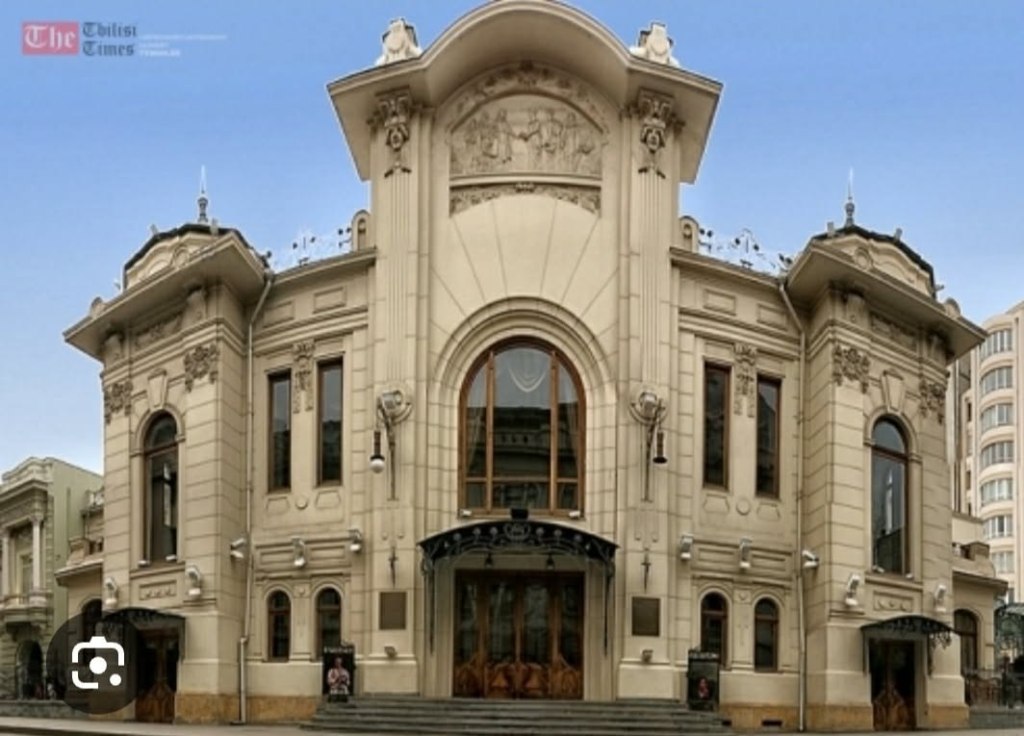
The building of the Supreme Court of Georgia is also associated with their name.
The brothers built the Hotel Palace (today the State Museum of Art on Freedom Square), as well as the Hôtel de France at the corner of Freedom Square and Tabidze Street. They also established the first children’s hospital in Avlabari.
One of their most notable philanthropic projects was the House for the Poor (today the Vera District Administration). They also financed the Catholic Church of Saints Peter and Paul in Tbilisi.
Incidentally, the famous Batumi Cathedral was also built with their financial support.
Their family residence, a three-storey building near Freedom Square, was demolished during the Soviet period.
Another prominent entrepreneur of the era was David Sarajishvili, founder of Georgian cognac production. In 1888, he opened the first cognac factory in the entire Russian Empire. The winery on Petriashvili Street in Tbilisi was also financed by him. Today, the historic site has been transformed into a multicultural gastronomic and culinary space.
Sarajishvili was also associated with the construction of Kashveti Church. He made a major financial contribution and personally took the initiative to support its construction.
His private residence deserves particular attention. Designed with Georgian national architectural elements, it now houses the Writers’ House.
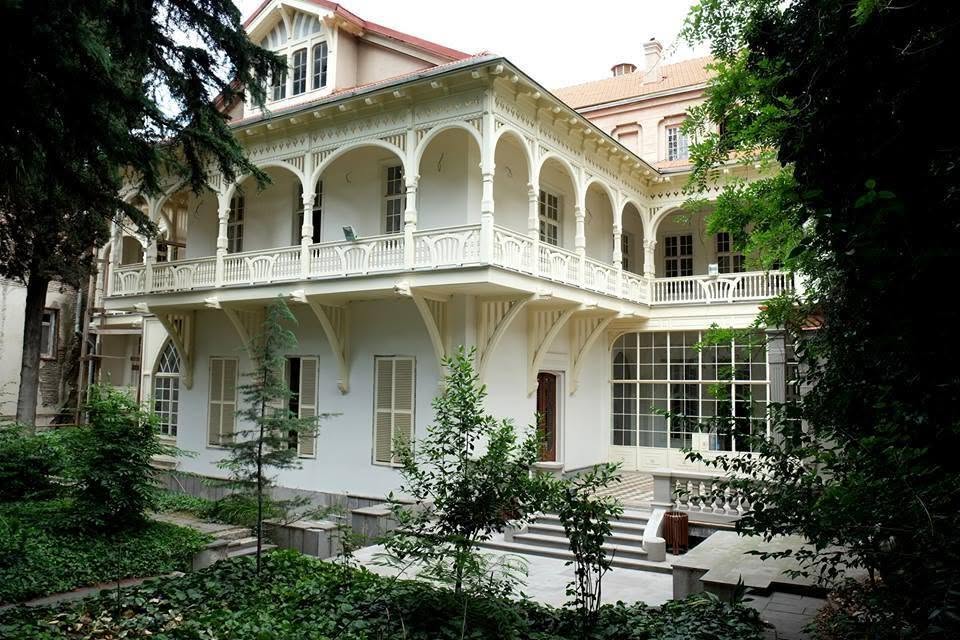
Several revenue-generating residential buildings in Old Tbilisi are also linked to Sarajishvili’s name.
Another figure whose contribution deserves recognition is Giorgi Kartvelishvili, entrepreneur and philanthropist. In addition to his timber and railway businesses, he financed the publication of numerous books, including the famous edition of The Knight in the Panther’s Skin, illustrated by Mihály Zichy. https://georgiacom.org/2018/09/07/the-building-with-georgian-inscription-salami-distinguished-buildings-of-tbilisi-iii/
He left an indelible mark on Tbilisi’s architectural landscape with his Sololaki residence, a masterpiece of Art Nouveau.
Another remarkable example of Modernist architecture is the house of Erast Chavchanidze on Aghmashenebeli Avenue.https://georgiacom.org/2018/09/05/a-pearl-of-tbilisi-and-erasti-chavchanidze-distinguished-buildings-of-tbilisi-ii/
The residences of the Georgian nobility also deserve mention: the Orbeliani Palace (now the Presidential Palace); Princess Tekla Bagrationi’s Palace (now a hotel); the house of Ivane Bagration-Mukhraneli (next to the National Library); Prince Gabashvili’s “Makman House”; https://georgiacom.org/2018/10/04/residential-blue-house-with-carved-balconies/and many other architectural gems that continue to shape the city’s face today, as well as many that, sadly, have been lost.

